Red Light Therapy Product Manufacturers
Official Site Only: ideatherapy.com | Beware of Counterfeits















Custom Red Light Therapy Panels: Buyer Requirements Guide
Custom red light therapy panels should be specified around the buyer’s market, application and operating environment—not simply a list of attractive features. A professional requirement brief should define wavelength strategy, panel size, optical performance, control architecture, installation method, environmental conditions, compliance needs and brand-level customization before sampling begins.
This approach is especially important for distributors, wellness brands, clinics, gyms, spas and professional equipment companies. The clearer the specification at the beginning, the easier it is to control development cost, sample revisions, production consistency and final product positioning.

1. Define the Commercial Use Before Choosing Specifications
The same panel specification should not be used for every market. A compact home wellness device, a full-body gym system and a sauna installation have very different requirements.
Start by defining where the panel will be used, who will operate it, how often it may run each day and what coverage is required. Commercial facilities may prioritize durability, simple operation and mounting flexibility, while premium consumer brands may place greater value on interface design, smart controls and visual differentiation.
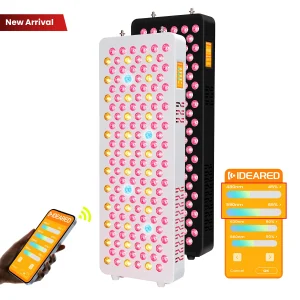
Buyers considering intelligent commercial systems can review IDEATHERAPY’s Voice + APP red light therapy panels to understand how control architecture can vary across a product family.
2. Build a Wavelength Strategy Instead of Chasing More Wavelengths
Wavelength selection should be intentional. More wavelengths do not automatically make a panel better. Buyers should first determine which wavelength groups are relevant to their product positioning and then confirm how LEDs are distributed across the treatment area.
Important questions include whether wavelengths can be independently controlled, whether brightness can be adjusted by wavelength, how the LED layout affects coverage, and whether the selected optical design remains consistent across different panel sizes.
For buyers evaluating multi-spectrum products, the 7-wavelength red light therapy panel series provides another reference point for comparing wavelength configurations and panel formats.
3. Specify the Control Experience
Control design has become an important part of product differentiation. Depending on the target user, a custom panel may use touchscreen control, remote control, mobile APP operation, voice control, preset programs or independent wavelength adjustment.
For premium brands, the interface itself can become part of the brand experience. A custom project may therefore include screen colors, logo presentation, menu structure, preset programs or voice-command logic rather than simply changing the exterior logo.
For example, the RLUltra platform supports customization involving voice interaction, enclosure design, wavelength configurations within the platform’s available range and touchscreen interface development. Buyers can review the RLUltra 600MAX professional panel for an example of deeper panel customization.
Brands that want a different user experience can also compare Music + APP red light therapy panels when defining control and entertainment features for commercial wellness environments.
4. Decide Panel Size, Coverage and Installation Together
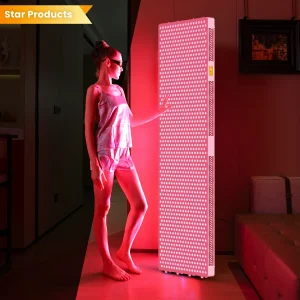
Panel size should not be selected independently from installation. Buyers should define whether the device will be desktop-mounted, wall-mounted, vertically installed, horizontally positioned or used with a rolling stand.
A larger panel may improve treatment coverage, but it also affects shipping volume, weight, structural requirements and installation space. Commercial buyers should therefore evaluate the complete system rather than only the panel itself.
IDEATHERAPY’s red light therapy stands and accessories provide examples of how mounting and positioning options can form part of the final B2B solution.
5. Match the Enclosure to the Operating Environment
Environmental requirements are often overlooked during early sourcing discussions. A panel intended for a dry wellness studio does not face the same conditions as equipment installed inside or near a sauna.
For high-temperature or high-humidity environments, buyers should discuss enclosure sealing, heat management, materials, mounting location and electrical protection before approving the design. These requirements may influence the entire product architecture.
For example, IDEATHERAPY’s IP65 sauna red light therapy panel range is designed around commercial sauna environments, where moisture and temperature conditions require a different engineering approach from standard indoor panels.
6. Separate Brand Customization From Engineering Customization
A professional buyer brief should clearly separate cosmetic changes from technical development.
| Requirement Area | Typical Customization |
|---|---|
| Branding | Logo, enclosure color, labels and packaging |
| Optical System | Wavelength mix, LED configuration and lens strategy |
| Controls | Touchscreen, APP, remote, voice and preset programs |
| Mechanical Design | Panel size, ventilation, mounting and accessories |
| User Experience | Interface, instructions, controls and operating workflow |
| Packaging | Color box, protection, manuals and market labeling |
This distinction makes quotation and development discussions more accurate. Logo printing may require little engineering work, while changing enclosure dimensions, electronics or firmware can affect tooling, testing, MOQ and lead time.
7. Define Verification Before Approving the Sample
A sample should be evaluated against agreed requirements rather than personal impressions alone. Buyers should prepare an approval checklist covering dimensions, wavelength configuration, controls, accessories, noise, heat behavior, packaging, labels and user instructions.
If performance values are important to the commercial claim, the test method should also be defined. Recording measurement distance, equipment and test conditions creates more useful data than simply using a single headline specification.
Custom Red Light Therapy Panel Requirement Checklist
- Target market and customer type
- Home or commercial usage environment
- Required panel size and treatment coverage
- Wavelength combination and control strategy
- Touchscreen, APP, remote or voice requirements
- Mounting, stand or installation method
- Environmental conditions such as heat and humidity
- Branding, enclosure and packaging requirements
- Certification and documentation requirements
- Sample acceptance and performance test criteria
FAQ
1. What can be customized on a red light therapy panel?
Customization may include wavelength configuration, panel size, enclosure color, logo, touchscreen interface, APP functions, voice control, remote control, mounting systems, accessories and packaging.
2. How should buyers choose wavelengths for a custom panel?
Wavelengths should be selected according to the intended product positioning, optical design and target use rather than simply maximizing the number of wavelengths.
3. Can touchscreen and APP controls be customized?
Depending on the product platform and project scope, buyers may customize interface elements, presets, branding, control logic and selected smart functions.
4. Can a red light therapy panel be customized for sauna use?
Yes, but sauna projects require specific consideration of heat, humidity, sealing, materials, electrical protection and installation conditions.
5. What information should buyers provide before requesting a quote?
Provide the target market, panel size, wavelength requirements, control functions, installation method, quantity, certification needs, branding requirements and expected launch schedule.
6. Should buyers approve a sample before mass production?
Yes. The sample should be checked against an agreed specification and acceptance checklist before mass production is authorized.






 简体中文
 Deutsch
 Français
 Português
 Italiano
 Русский
 한국어
 العربية
 日本語
 Svenska
 Polski
 Magyar
 Čeština
 Dansk
 繁體中文
 Nederlands
 Suomi
 Irish