Red Light Therapy Product Manufacturers
Official Site Only: ideatherapy.com | Beware of Counterfeits















How to Read a Red Light Therapy Panel Spec Sheet
Short answer: to read a red light therapy panel spec sheet, start with six items: wavelength, irradiance, treatment distance, LED count, beam angle and safety certification. Do not judge a panel by wattage alone. A useful spec sheet should explain how much light reaches the user, at what distance it was measured, which wavelengths are included and whether the device can control heat during long sessions.

Spec Sheet Checklist
- Wavelength: check whether the panel uses red light, near-infrared light or a multi-wavelength layout.
- Irradiance: look for measured output at a clear distance, such as 6 inches, 12 inches or 30 cm.
- Coverage area: confirm whether the panel size fits face, upper body, full body or commercial treatment needs.
- Beam angle: a narrow angle concentrates light; a wider angle can improve coverage.
- Heat control: check fans, housing design, operating temperature and long-session stability.
- Certification: review electrical safety, market compliance and supplier documentation before buying in bulk.
1. Start with Wavelength, Not Wattage
Wavelength tells you what type of light the device uses. In red light therapy panels, common wavelengths include 630nm, 660nm, 810nm, 830nm and 850nm. Visible red wavelengths such as 630nm and 660nm are often used for skin-facing applications, while near-infrared wavelengths such as 810nm, 830nm and 850nm are commonly used for deeper tissue and recovery-focused positioning.
If you need a broader explanation before reading a specification table, review our guide to the ideal wavelength for red light therapy. If your main comparison is 660nm and 850nm, this 660nm vs. 850nm wavelength comparison explains the difference in a more direct way.
2. Understand Irradiance and Measurement Distance
Irradiance is one of the most important red light therapy specifications because it describes how much optical power reaches a defined area. It is often listed as mW/cm2. However, the number is only useful when the measurement distance is also stated. A panel measured at 3 inches will usually show a higher number than the same panel measured at 12 inches.
For comparison, ask the supplier where and how the irradiance was measured. Useful data should include distance, test instrument, average reading area and whether the value is a peak reading or a practical treatment-zone reading. To go deeper on this metric, see our article on the importance of irradiance in red light therapy devices.
| Spec Item | What It Means | Buyer Question |
|---|---|---|
| Wavelength | The light spectrum used by the panel | Does it match skin, recovery, wellness or full-body use? |
| Irradiance | Light output reaching the treatment area | At what distance was it measured? |
| Wattage | Electrical input or rated power | Is this actual consumption or only rated LED power? |
| Beam angle | How wide or focused the light output is | Does the angle fit close-range or wider treatment coverage? |
| Certification | Safety and market compliance documentation | Can the supplier provide documents for your target market? |
3. Compare Coverage Area and Panel Size
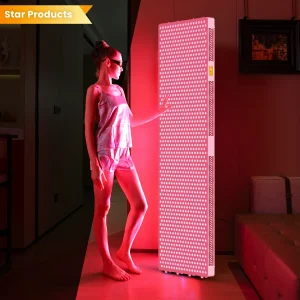
A small desktop panel, a professional full-body panel and a therapy bed should not be evaluated with the same expectations. Coverage area depends on panel height, width, LED spacing, beam angle and treatment distance. If a panel is marketed as full body, the spec sheet should make the treatment area clear enough for a buyer to judge real use.
For gyms, spas, wellness centers and physiotherapy rooms, coverage area can be just as important as raw output. A powerful panel with poor coverage may require the user to reposition frequently, while a well-designed panel can support a more comfortable treatment workflow.
4. Check Beam Angle and Light Distribution
Beam angle affects how the light spreads from each LED. A narrower angle may create a stronger reading at a specific point, while a wider angle can improve the coverage area. Neither choice is automatically better. The best option depends on the treatment distance, panel size and user scenario.
For deeper technical reading, use our guide to LED beam angle and light penetration. For B2B buyers, this is especially useful when comparing suppliers who show high irradiance numbers but do not explain the measurement setup.
5. Do Not Ignore Heat Dissipation
Heat management is easy to overlook, but it affects user comfort, LED stability and long-term product reliability. A high-power red light therapy panel should use a suitable housing, ventilation structure, fan layout and thermal design. If heat builds up during longer sessions, output stability and customer experience can both suffer.
Before placing a bulk order, ask how the panel performs after repeated sessions. A reliable supplier should be able to explain fan design, housing materials, operating temperature, heat dissipation design and testing procedures.

6. Evaluate Certifications and Supplier Support
For B2B buyers, a spec sheet is not only a performance document. It is also part of your sales, compliance and after-sales risk. If you plan to sell red light therapy panels in different markets, confirm which certifications, test reports, user manuals, packaging files and warranty terms the supplier can support.
This is especially important for distributors, private-label brands and OEM/ODM buyers. A supplier may offer attractive specifications, but if the documentation does not match your market, the product can become difficult to import, list or sell.
Recommended Panel Options to Compare
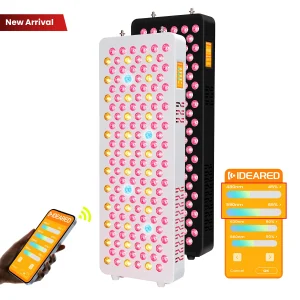
When comparing red light therapy specifications, use actual product pages to check wavelength layout, size, control method, treatment use and commercial positioning. These examples can help buyers connect the spec sheet to real product selection.

RL2000PRO Full Body 660/850nm Panel
A full-body panel option for buyers comparing wavelength, coverage area and professional treatment positioning.

RL1200PRO 7-Wavelength Full Body Panel
A multi-wavelength panel for comparing broader wavelength coverage, full-body use and professional buyer needs.
FAQ: Red Light Therapy Panel Specifications
What is the most important red light therapy panel specification?
Irradiance at a stated distance is one of the most important specifications, but it should be read together with wavelength, coverage area, beam angle and heat control. A single number does not tell the full story.
Is higher wattage always better?
No. Wattage tells you about electrical power, not necessarily how much useful light reaches the user. A better comparison includes irradiance, optical design, LED quality and treatment distance.
What wavelengths should a red light therapy panel include?
For many general-purpose panels, 660nm and 850nm are a practical foundation. Premium or professional panels may add 630nm, 810nm, 830nm or 1060nm depending on product positioning.
How should I compare irradiance between two panels?
Compare irradiance only when the measurement distance and method are clear. A reading taken close to the panel cannot be fairly compared with a reading taken farther away.
What should distributors ask before buying in bulk?
Distributors should ask for wavelength data, irradiance reports, operating temperature, warranty terms, certifications, packaging options, manuals, lead time and customization support.
Need Help Comparing Panel Specifications?
IDEATHERAPY supports red light therapy distributors, private-label brands and OEM/ODM buyers with wavelength selection, product specification matching, panel design, certification planning and bulk manufacturing. If you are comparing spec sheets, focus on measurable performance first, then choose the panel that fits your market and application.









 简体中文
 Deutsch
 Français
 Português
 Italiano
 Русский
 한국어
 العربية
 日本語
 Svenska
 Polski
 Magyar
 Čeština
 Dansk
 繁體中文
 Nederlands
 Suomi
 Irish