Red Light Therapy Product Manufacturers
Official Site Only: ideatherapy.com | Beware of Counterfeits















Red Light Therapy Distributor Buying Guide
A successful red light therapy distributor does not build a catalog by collecting as many products as possible. The stronger strategy is to create a product portfolio that fits specific channels, price levels and customer groups while remaining easy to certify, stock, explain and support.
For distributors serving wellness centers, gyms, spas, clinics, beauty businesses and online retailers, product selection should be treated as portfolio management. This guide explains how to evaluate red light therapy products from a distributor perspective, including product mix, certification readiness, commercial positioning, quality control and long-term supply support.

1. Build Your Product Portfolio by Sales Channel
The first decision is not which model to buy. It is where the product will be sold. A professional recovery studio needs different equipment from an Amazon seller or beauty distributor.
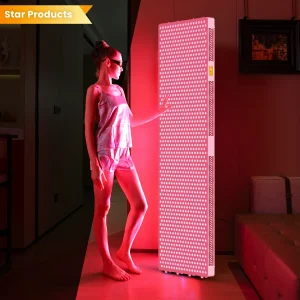
For full-body commercial applications, larger panels can support gyms, wellness centers and recovery businesses. Compact products can fit e-commerce and entry-level markets, while sauna equipment requires specific environmental engineering. Face masks and wearable devices may suit beauty, retail and home-wellness channels.
A useful starting point is the IDEATHERAPY product comparison, which allows buyers to compare panel families, wavelengths and product formats before defining a distributor range.
2. Create Good-Better-Best Price Architecture
A distributor should avoid offering five products that solve the same problem at nearly the same price. Instead, build clear product tiers.
| Portfolio Level | Typical Buyer | Distributor Strategy |
|---|---|---|
| Entry | Home users and new customers | Compact size, simple controls, accessible price |
| Professional | Studios, clinics and wellness businesses | Larger coverage, stronger controls and accessories |
| Premium | High-end commercial operators | Advanced controls, broader configuration and brand differentiation |
This structure makes sales training easier and prevents unnecessary overlap between models.
3. Recommended IDEATHERAPY Products for Distributors
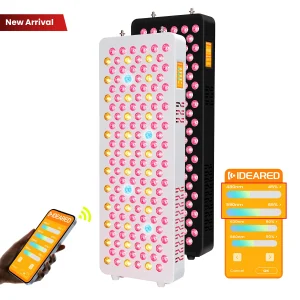
For a premium full-body panel category, the RLUltra1000 is positioned for professional use. It uses eight wavelengths—630, 650, 660, 670, 810, 830, 850 and 1060 nm—and 600 quad-chip LED packages for 2,400 chips. Individual dimming and pulse control can support distributors targeting higher-specification markets.
For commercial wellness venues that want a different customer experience, the RLPRO2000-X2 provides a large-format nine-wave platform with music functionality and a three-year warranty. This type of product can help distributors differentiate beyond basic two-wavelength panels.
For spa and thermal-wellness channels, the SA800 commercial sauna panel is designed for high-heat and high-humidity applications. The SA800 uses 800 LEDs, eight wavelengths and an IP65-oriented sauna design, making it a different category from standard indoor panels.
Beauty distributors may also evaluate the TLM300PRO LED face mask, which uses 460 nm, 630 nm and 850 nm wavelengths with 288 LED chips and a rechargeable battery.
4. Certifications Should Influence Your Buying Decision
For distributors, certifications are not only a marketing benefit. They affect import planning, marketplace requirements, retailer confidence and the claims that can be made in each country.
IDEATHERAPY’s certification portfolio includes ISO 13485 and MDSAP quality-system certification, as well as product-related documentation involving UL, ETL, IEC 60601 standards, UKCA, FCC, TGA, MDL, RoHS and SAA. The website also lists FDA-related registrations and 510(k) information for specific mask products.
However, distributors should never assume that one certificate applies to every model. Always verify the exact product number, electrical configuration, intended use and target market. The guide on red light panel certifications for global markets explains why model-specific compliance review is essential.

5. Evaluate Distributor Margin Beyond Unit Cost
A profitable product must leave enough room for freight, storage, advertising, sales commissions, warranty service and returns. A low factory price does not automatically create a strong distributor margin.
Distributors should compare carton size, product weight, replacement-part cost, warranty period, accessories and expected after-sales workload. Large full-body equipment may provide higher order value but require more logistics planning, while compact products can be easier to stock and ship.
6. Check Repeat-Order Consistency
The first order proves that a supplier can make a product. The second and third orders prove whether the supplier can reproduce it.
Ask how the manufacturer controls wavelength configuration, LEDs, electronics, firmware, enclosure materials and packaging between production batches. For a distributor, consistent reorder specifications are critical because customers expect the same product regardless of production month.
7. Build a Distributor Assortment, Not a Random Catalog
A strong distributor line might combine one premium full-body system, one mid-sized professional panel, one portable product and one specialist category such as sauna or beauty. This creates cross-selling opportunities without overwhelming sales teams.
For example, a distributor targeting wellness and recovery businesses could use RLUltra as the premium smart-panel family, RLPRO-X2 for experience-focused commercial installations and the SA series for sauna operators. A separate beauty channel could add LED masks and selected wearable devices.

Red Light Therapy Distributor Buying Checklist
- Define target channels before selecting products.
- Create entry, professional and premium price tiers.
- Verify certifications for each exact model.
- Review freight, storage and warranty costs.
- Confirm repeat-order specification control.
- Choose products with clear differences between categories.
- Plan spare parts and after-sales support before launch.
FAQ
1. What products should a new red light therapy distributor start with?
A focused range of three to five clearly differentiated products is usually easier to sell, stock and support than a very large catalog.
2. Which red light therapy products are suitable for commercial buyers?
Full-body panels, professional stands, sauna-compatible panels and commercial wellness systems may be suitable depending on the business environment.
3. What certifications should distributors request?
Requirements vary by market and model. Review applicable safety, EMC, quality-system and regulatory documents for the exact product being purchased.
4. Is FDA registration the same as 510(k) clearance?
No. Registration, listing and 510(k) clearance are different regulatory concepts. Distributors should verify the status and intended use of the specific product.
5. How should distributors compare product profitability?
Compare landed cost, freight, storage, accessories, warranty, returns and expected selling price instead of factory price alone.
6. Why is repeat-order consistency important?
Distributors need the same specifications and user experience across production batches so customers and resellers receive consistent products.






 简体中文
 Deutsch
 Français
 Português
 Italiano
 Русский
 한국어
 العربية
 日本語
 Svenska
 Polski
 Magyar
 Čeština
 Dansk
 繁體中文
 Nederlands
 Suomi
 Irish