Red Light Therapy Product Manufacturers
Official Site Only: ideatherapy.com | Beware of Counterfeits















RLPRO2000 8 Wavelength High Power Red Light Therapy Panel


RLPRO2000 8 Wavelength High Power Red Light Therapy Panel


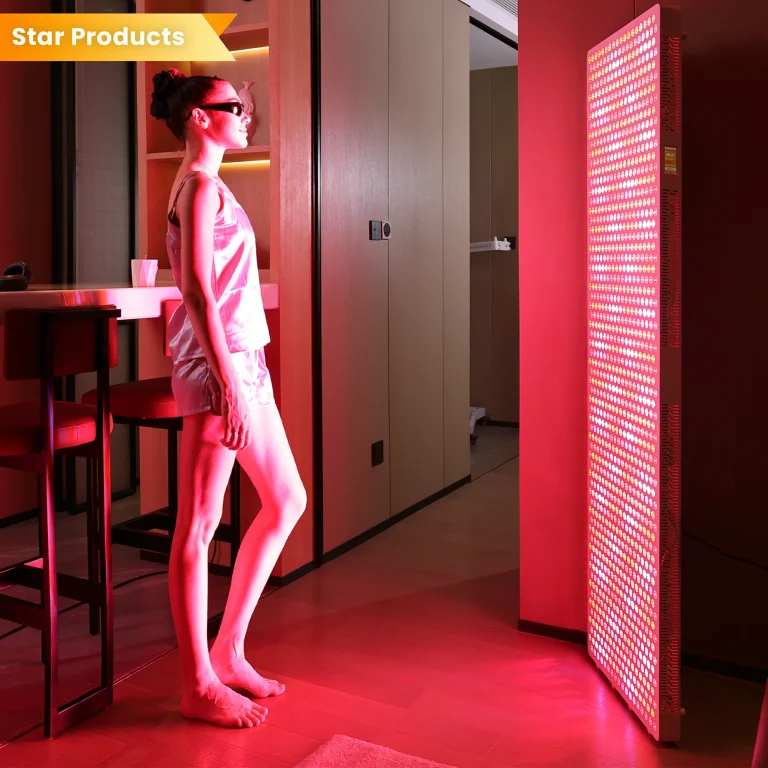
For a commercial buyer, the useful question is not simply whether a panel produces red and near-infrared light. The real evaluation is whether its optical output, control architecture, physical coverage and manufacturing documentation can support a repeatable professional program. The RLPRO2000 is an 8 wavelength red light therapy panel developed around that broader requirement, combining a full-body format with independent channel control and a high-density LED platform.
Its 1152 dual-chip LEDs distribute four red wavelengths and four near-infrared wavelengths across a 1890 x 580mm treatment surface. Operators can adjust wavelength channels, brightness and pulse settings from the touch-screen interface. Buyers comparing different installation sizes can also review the RLPRO1000 full-body 8-wavelength panel and the RLPRO1200 8-wavelength panel before selecting the most suitable coverage format.
RLPRO2000 8 Wavelength Red Light Therapy Panel Highlights
- Large-format panel designed for full-body coverage in professional and commercial environments.
- 1152 dual-chip LEDs distributed across eight independently adjustable wavelength channels.
- Standard spectrum of 630nm, 650nm, 660nm, 670nm, 810nm, 830nm, 850nm and 1060nm.
- Touch-screen interface for wavelength selection, brightness and pulse-frequency settings.
- Individual dimming from 1% to 100% for each wavelength channel.
- Pulse-frequency adjustment from 1Hz to 10,000Hz, subject to the selected production configuration.
- Choice of 30-degree or 60-degree lenses for different beam-distribution requirements.
- 100-240V AC input for destination-market configuration and commercial installation planning.
- OEM/ODM options for wavelength mix, housing color, logo, interface, packaging and documentation.
Technical Specifications
| Model | RLPRO2000 |
| Product type | High power full-body 8 wavelength red light therapy panel |
| LED configuration | 1152 dual-chip LEDs |
| Standard wavelengths | 630nm, 650nm, 660nm, 670nm, 810nm, 830nm, 850nm and 1060nm |
| Panel dimensions | 1890 x 580 x 65mm (L x W x H) |
| Input voltage | 100-240V AC |
| Working current | 14A +/- 5% at 220V; 16A +/- 5% at 110V |
| Frequency | 50/60Hz |
| Lens options | 30-degree or 60-degree |
| Manufacturer-stated irradiance | All channels: at least 1400W/m2 at 6 inches; red channels: at least 150W/m2; NIR channels: at least 1200W/m2 |
| Dimming | 1-100%, individually adjustable by wavelength |
| Pulse frequency | 1-10,000Hz, individually adjustable by wavelength |
| Primary control | Touch-screen control interface |
| Customization | Wavelength, housing color, logo, interface, packaging and documentation options |
Specification note: the values above reflect the current manufacturer information for this model. Irradiance readings vary with distance, meter type, calibration, beam angle and test position. Procurement teams should request the latest technical sheet and measurement report for the exact production configuration. The guide to reading a red light therapy panel specification sheet explains how to compare these values consistently.
How the Eight-Wavelength Configuration Supports Protocol Design
This 8 wavelength red light therapy panel separates its spectrum into four visible red channels and four near-infrared channels. The 630nm, 650nm, 660nm and 670nm channels give operators several options within the red-light range, while 810nm, 830nm, 850nm and 1060nm extend the available spectrum into near-infrared. Rather than forcing every session to use one fixed blend, the controller allows each channel to be adjusted for the approved operating program.
For B2B buyers, this flexibility is most valuable when it is paired with clear protocol governance. A clinic, wellness center or recovery studio should document which channels are used, the treatment distance, session length, brightness and pulse setting. That makes staff training and quality control more consistent and prevents an extensive feature set from becoming operationally confusing.
Irradiance, Distance and Full-Body Coverage
A high headline irradiance value does not describe the complete user experience. Buyers should evaluate output at the intended working distance, across the center and edges of the panel, and with the same wavelength channels that will be used in practice. The stated measurements at six inches provide a reference point, but they should be read together with uniformity maps, thermal data and the test instrument used.
The 1890mm panel height is designed to reduce the need to reposition a user during a full-body session. However, final coverage still depends on installation orientation, distance and lens selection. A pre-production sample should therefore be tested in the intended room layout before mounting positions and operating procedures are finalized.
Individual Wavelength, Brightness and Pulse Control
The touch-screen interface provides direct control of wavelength channels and output intensity. Individual dimming from 1% to 100% helps operators create lower- and higher-output programs without changing the physical setup. Adjustable pulse frequency adds another configurable parameter, but it should be treated as a documented operating setting rather than an unsupported performance claim.
During supplier evaluation, buyers should test response time, setting memory, lockout behavior, screen visibility and recovery after a power interruption. For multi-location operators, the interface and firmware version should remain consistent across production batches so that training materials do not need to be rewritten for each shipment.
Choosing Between 30-Degree and 60-Degree Lenses
A narrower lens concentrates the beam more tightly, while a wider lens spreads light over a broader area. Neither option is automatically better for every installation. Treatment distance, panel spacing and the required uniformity across the body should guide the choice. The article on LED beam angle and light distribution provides additional context for comparing lens configurations.
Installation Planning for Professional Spaces
Because this 8 wavelength red light therapy panel is a large electrical device, installation planning should begin before purchase approval. Confirm available floor or wall space, electrical capacity, ventilation clearance, cable routing, emergency access and the workflow for cleaning the panel surface. Operators should also define a stable user position and safe entry and exit around the equipment.
Mounting requirements vary between treatment rooms. Buyers can review IDEATHERAPY’s red light therapy panel stands and accessories when comparing vertical, horizontal and adjustable installation formats. The final stand or mounting system must be confirmed for the panel weight, orientation and local safety requirements.
Commercial Applications
- Wellness centers: integrate full-body sessions into a structured membership or appointment program.
- Fitness and recovery studios: provide a configurable light-based wellness service alongside established recovery equipment.
- Spas: add a technology-led service that can be standardized across rooms and locations.
- Distributors: position a large-format model for professional buyers who need more coverage and channel control.
- Private-label brands: develop a differentiated panel through validated wavelength, interface, housing and packaging options.
Product claims should match the intended market, available evidence and local regulations. The panel should be presented accurately as a light-based wellness device unless the exact configuration and documentation support a regulated medical claim in the destination market.
Quality and Procurement Checklist
- Request the current technical data sheet for the exact wavelength and electrical configuration.
- Review irradiance maps at the intended operating distance, not only a single center-point reading.
- Confirm the meter model, calibration status and test procedure used for optical measurements.
- Test touch-screen functions, individual channel control, dimming, pulse settings and power-recovery behavior.
- Verify thermal performance, fan noise and ventilation requirements during an extended operating cycle.
- Confirm the stand or mounting method, panel weight and installation instructions.
- Check plug type, voltage, labeling, manuals and packaging for the destination market.
- Agree on sample approval, inspection criteria, spare parts, warranty handling and batch traceability.
Documentation requirements differ by country and intended use. Before placing a volume order, review the overview of red light panel certifications for global markets and confirm which reports apply to the final branded configuration. A certification held by one model or component should not be assumed to cover every customized version.
OEM/ODM Options for the RLPRO2000
For an 8 wavelength red light therapy panel intended for a private-label range, IDEATHERAPY can discuss wavelength ratios, exterior color, logo placement, interface presentation, user manuals, cartons and other project requirements. A responsible customization process starts with a written product brief and proceeds through technical review, sample confirmation, compliance assessment and production approval. Changes to optical output, electronics or labeling may require additional validation, so they should be agreed before artwork and packaging are finalized.
FAQ
What wavelengths are included in the RLPRO2000?
The standard eight-channel configuration includes 630nm, 650nm, 660nm, 670nm, 810nm, 830nm, 850nm and 1060nm. Buyers should confirm the final wavelength ratio and LED layout on the approved technical sheet.
How many LEDs does the panel use?
The current specification lists 1152 dual-chip LEDs. The chip arrangement and wavelength allocation should be verified for the exact production version.
Can each wavelength be controlled separately?
Yes. The interface is specified to support individual wavelength selection, dimming and pulse-frequency adjustment. Buyers should test all controls on the production sample and document approved settings for operators.
What is the difference between this model and a smaller panel?
The main difference is coverage. At 1890 x 580mm, the RLPRO2000 is designed for full-body positioning with less user repositioning. Smaller panels may be more suitable where floor space, portability or a lower entry cost is the priority.
Is the RLPRO2000 intended for commercial use?
Its size, control options and high-density LED platform are suited to professional evaluation by wellness centers, fitness facilities, spas and distributors. Suitability still depends on installation, documentation, staff procedures and destination-market requirements.
Can the panel be customized for a private-label project?
Yes. Available discussions can include wavelength configuration, housing color, logo, interface, manual, packaging and other OEM/ODM requirements. Feasibility, order quantity, validation and compliance implications must be confirmed for each project.
FAQs
Q1:Are you a manufacturer or a trading company?
Q2:What payment way I can use to proceed the order?
Q3. What is the lead time & arrival?
Q4. Do you have MOQ (Minimum Order Quantity) required for any items you have?
Q5. What medical certifications do you have?
Q6. What is the difference between red and near infrared light therapy?
Q7. How long does it take for red light therapy to work?
Q8. Do I need to continue to use the light as much when I start seeing results?




 简体中文
 Deutsch
 Français
 Português
 Italiano
 Русский
 한국어
 العربية
 日本語
 Svenska
 Polski
 Magyar
 Čeština
 Dansk
 繁體中文
 Nederlands
 Suomi
 Irish